


By Qian Yuying, Akira Tsuruta, 2026.03.10
Recently, we had the pleasure of interviewing Mr. Gao, who provides consulting services for starting restaurant businesses in Kyoto. In this post, I’d like to share some key takeaways from our conversation that I believe will be particularly insightful and interesting for our audience.” This is the second part of the interview. In the second part, we mainly talk about how to brand in Kyoto. We recommend this article to anyone interested in China’s Guochao brands, including Chagee, which has been a hot topic among business people recently, so we hope you will take a look. (Part 1 is here: How Chinese / Foreign restaurant brands can succeed in the Japanese market -An interview with a restaurant opening support consultant in Kyoto- (Part 1))
Profile of Mr. Gao
He operates a chain of dim sum restaurants in Kyoto and leverages his extensive industry expertise to consult for Chinese brands entering the Japanese market. Notably, he recently spearheaded the Japanese expansion of M Stand, an emerging Chinese cafe brand.
Interview Part
6. Understanding the Kyoto Market
Interviewer: “Mr. Gao, you are based in Kyoto and focus your activities here. Could you tell us why you chose Kyoto as the location for the very first store? Also, most international brands tend to open their first Japanese location in Tokyo or Osaka. Compared to those major cities, what specific advantages or strengths does Kyoto offer?”
Mr. Gao: “The reason I chose Kyoto is simple: I loved the atmosphere of its historic streets. By a stroke of fate, after finishing language school, I went on to attend university in Kyoto and ended up living here for ten years. From a personal perspective, the primary factor is simply the excellent ambiance—I personally love Kyoto.”
Mr. Gao: “From an objective standpoint, the relatively high purchasing power of the people in Kyoto is a key factor. From the perspective of overseas expansion, it is undeniable that Tokyo, as the capital, and Osaka, as a major metropolis, possess significantly stronger relative purchasing power. So, why did we choose Kyoto nonetheless? There are several strategic reasons.”
Mr. Gao: “First, it is because Kyoto is a world-class tourist city. The hallmark of such a city is the massive influx of people from all over the globe. The consumption behavior of these tourists tends to be focused: their interests are primarily leisure, dining, coffee, and souvenirs. Moreover, since they are on a trip, they aren’t particularly price-sensitive. In my case, when I travel, I have a mindset of ‘spending money’—after all, I’m there for the experience and the consumption. In this way, travelers, who represent a key target segment, tend to be much more generous with their spending.”
Mr. Gao: “Next, Kyoto is such a premier tourist destination that it actually faces challenges with overtourism. You could say the daytime pedestrian traffic far exceeds the city’s infrastructural capacity. For us shop owners, the more people passing in front of our stores, the better. In certain tourist areas, the pedestrian density can even rival that of Tokyo or Osaka. Those operating businesses in these spots can benefit from this incredibly high foot traffic. On the other hand, rents are not as prohibitively high as in Tokyo, and because travelers are less price-sensitive and have a higher intent to purchase, you can achieve an exceptionally high conversion rate (store entry and purchase rates).”
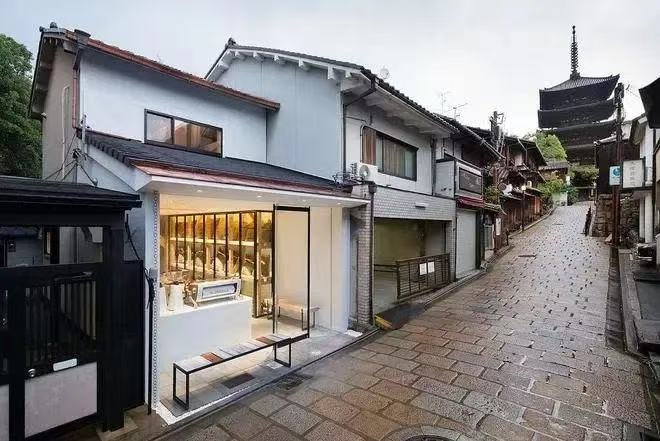
Figure 8. A % Arabica store in Higashiyama, Kyoto, benefiting from the heavy flow of tourist traffic
Source: %Arabica official website
Mr. Gao: “In addition, in Kyoto, you can establish touchpoints with consumers from all over the world. As one of the world’s premier tourist destinations, we encounter customers from every region—Europe, North America, Asia, the Middle East, and even Scandinavia. The experience gained and the data collected here allow us to understand the preferences and purchasing power of consumers from major countries and regions globally. Furthermore, the brand exposure is exceptionally high, which builds brand affinity. This creates a significant strategic advantage when we eventually expand into their home markets and daily lives of these international visitors.”
Mr. Gao: “Lastly, there is the intrinsic value of the name ‘Kyoto’ itself. Simply being a ‘brand from Kyoto’ is enough to capture the hearts of people worldwide. Kyoto, as an ancient capital, is perceived as a city that places immense importance on aesthetics. For brands that prioritize appearance and beauty—such as cafes or jewelry labels—succeeding in Kyoto directly elevates the brand’s value. I recall a business writer evaluating my project once said, ‘Opening a store in Kyoto is like obtaining a guarantee of your brand’s beauty within a developed market.’ If you are highly regarded in Kyoto, you will be perceived as a brand with not just a good image, but with true substance, no matter where you go in the world. The city of Kyoto itself possesses a powerful, distinct style. Therefore, a brand must be artistic, niche, and possess a strong human touch. Such a brand will not feel out of place; it will blend in seamlessly. For any style-conscious brand, opening a location in Kyoto offers a massive strategic advantage—a ‘bonus point’ for its global identity.”
Interviewer: “International tourists visit Kyoto with a strong interest in experiencing its local culture and industries. Given that, will it be necessary to strike a balance between maintaining the brand identity you’ve established in the Chinese market and localizing it to establish your position as a global brand?”
Mr. Gao: “I believe it depends on each individual brand. If it’s a relatively new brand in the Chinese market, it shouldn’t face much resistance. Of course, many people come to Kyoto specifically because they love the atmosphere of the ancient capital. However, after traveling for a while, their aesthetic senses can become somewhat desensitized. It’s just like how we start craving Chinese food after a long trip abroad, or how Westerners look for Western food after living overseas for a time. Being a modern brand doesn’t mean you can’t survive in Kyoto. With so many people visiting every day, there are always plenty of travelers who feel tired of looking at temples and think, ‘I’ve seen enough for now—I want to go somewhere modern.’”
Mr. Gao: “That said, some brands are inevitably more affected by the city’s identity than others. For example, ‘Guochao’ (China-chic) brands, which are currently popular in China for their heavy emphasis on traditional Chinese elements, would likely struggle in Kyoto. This is because international tourists visit Kyoto to experience Kyoto’s culture, not to encounter another distinct foreign culture. If these brands want to expand in Kyoto, they must first retain the core essence of Chinese culture while toning down the superficial Chinese elements. This might mean modifying surface-level details like the color schemes or typography on their packaging. To succeed overseas, one must sometimes be willing to discard the superficial and focus on the essence.”
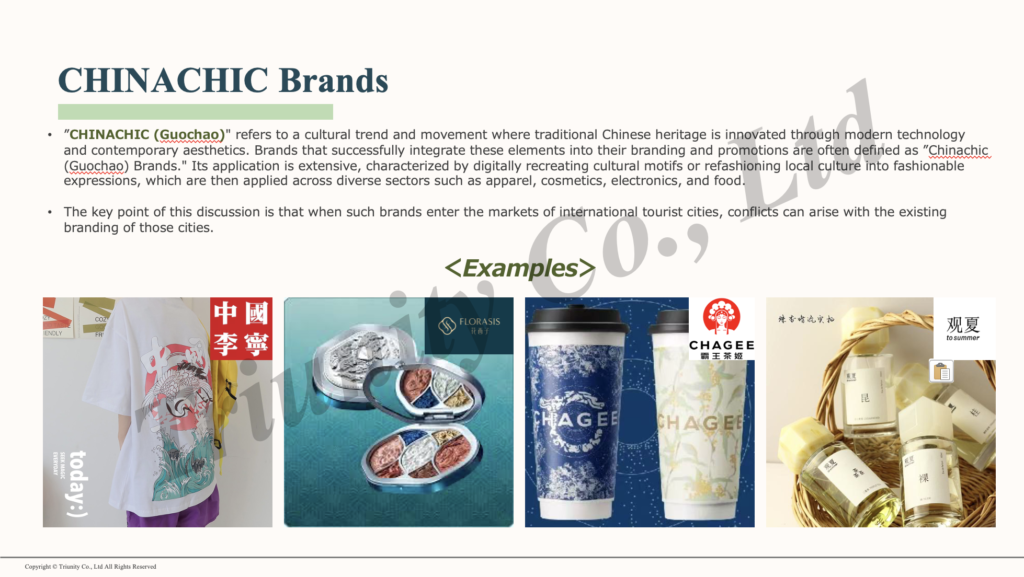
Figure 9. Examples of “Guochao” (China-chic) Brands
Sources: The brands’ official websites, etc.
Interviewer: “That makes sense. It’s not just limited to ‘Guochao’ brands—for instance, when we look at products with a strong Indian cultural influence, Indians might perceive them as possessing a traditional beauty that adds to the product’s charm. However, for those outside that culture, it can sometimes be difficult to fully appreciate or understand. It’s the same principle, isn’t it?”
Mr. Gao: “Exactly. If Delhi is your destination, tourists will naturally buy those local brands. But if you try to sell that same product in Paris, people will wonder, ‘Why should I buy an Indian product here?’ However, you can avoid those barriers by not explicitly banking on its ‘Indian-ness.’ For example, as an initiative to integrate with the local culture, if you could hire a Parisian designer to reinterpret and redesign the brand’s aesthetics, copy, and color palette, you could successfully convey the charm of cultural fusion and truly capture the hearts of consumers.”
Interviewer: “I see. So, in other words, by reducing the overt Chinese elements and fusing the brand with Japanese sensibilities, a Chinese-origin brand becomes much more accessible and acceptable to the Japanese audience. Is that the essence of it?”
Mr. Gao: “Yes. As I mentioned earlier, Kyoto is a city that places extraordinary importance on aesthetic sensibility. Even when it comes to visual expression, the city has its own unique standards. That is why I believe any brand aiming to enter Kyoto must possess a certain level of sophistication. A brand that asserts its Chinese cultural roots too aggressively is simply not suited for Kyoto; it would clash with the very atmosphere of the city.”
Interviewer: “Regarding the city itself—what kind of impression do you get from Kyoto?”
Mr. Gao: “It’s difficult to capture Kyoto’s personality in just a word or two. Conceptually, it is undoubtedly rooted in a deeply traditional style—that is the very essence of the city’s atmosphere. Yet, Kyoto is also an incredibly sophisticated city. It embraces a refined, abstract, and minimalist aesthetic, with a strong emphasis on modern design. I believe this modern style matches Kyoto perfectly. When you look at official brochures or magazines, you often see the five-story pagoda of Toji Temple and the Kyoto Tower captured in the same frame. It beautifully illustrates the contrast between the old and the new. It makes you realize that the people of Kyoto truly love what is modern and stylish. As you may know, Kyoto actually has the highest consumption of coffee and bread in all of Japan.”
Interviewer: “That sounds just like Shanghai.”
Mr. Gao: “Exactly. Although Shanghai is not an ‘ancient capital’ in the same sense. While Kyoto holds that title for Japan, it is simultaneously a city where Western-style pastries, bakeries, and cafes flourish. This is likely because Kyoto, as a preeminent tourist destination, maintains a calm and composed atmosphere. The entire city has a somewhat idiosyncratic, refreshing, and relaxed vibe. Over time, I believe both the brands operating in Kyoto and the people who visit begin to absorb this atmosphere. It isn’t overly boisterous; rather, it feels as though everything has been intentionally stripped down to its essence.”
Interviewer: “Given that, are there any particular Chinese brands you feel would be a good fit for Kyoto, or that you think definitely ought to make the move there?”
Mr. Gao: “In the tea-based beverage category, HEYTEA (喜茶) is definitely a brand that should come to Kyoto. I believe HEYTEA’s original DNA—its calm, relaxed, and composed atmosphere—would be a perfect fit for the city.” (Please refer this article about HEYTEA in Osaka: Can HEYTEA inspire Japanese consumers?)
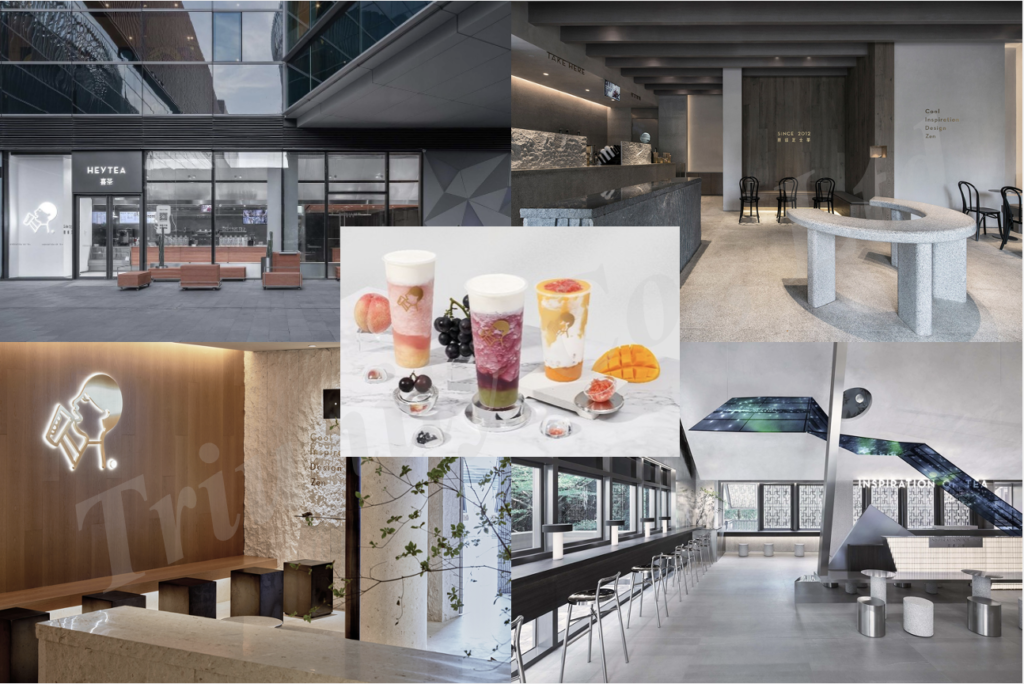
Figure 10. HEYTEA(喜茶)
Source: Trinity’s blog
Mr. Gao: “Next, although sourcing raw materials might be a challenge, I believe AH MA HANDMADE (阿嬷手作) would be a perfect fit for Kyoto’s style. The brand has a very cultural and local image, embodying a ‘farm-to-table’ or community-focused, handmade feel. Kyoto itself is a city defined by its craftsmanship—be it ceramics, metalwork, or various traditional workshops—where the human touch is palpable everywhere. It has the atmosphere of a highly developed light industry, dotted with small studios run by independent artists. The philosophy of AH MA HANDMADE aligns remarkably well with this Kyoto spirit.”
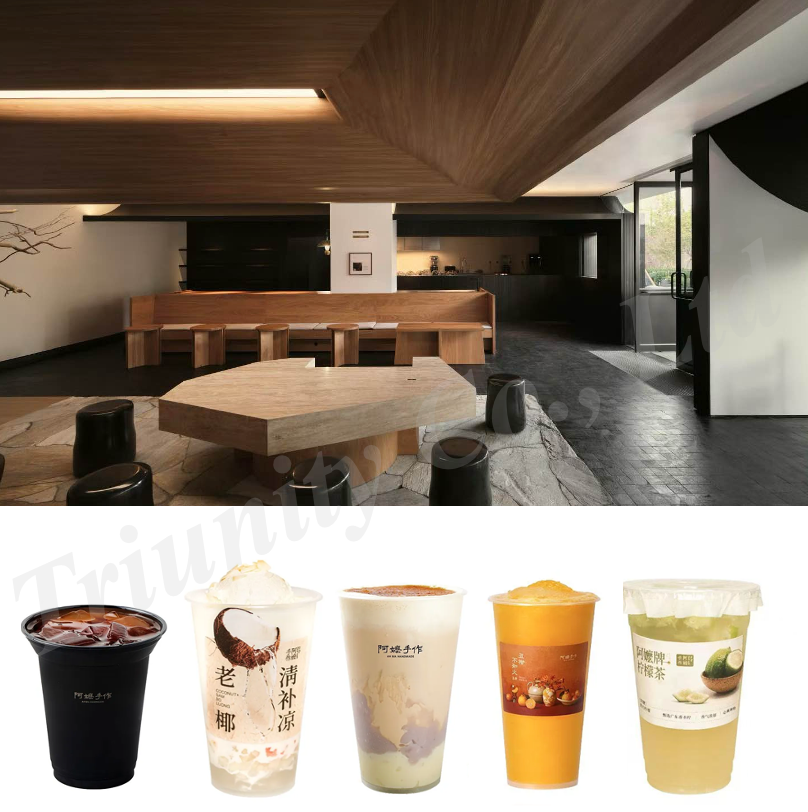
Figure 11. AH MA HANDMADE(阿嬷手作)
Source: Trinity’s blog
Interviewer: “Conversely, are there any brands that you feel might not be suited for an expansion into Kyoto?”
Mr. Gao: “I don’t believe CHAGEE (霸王茶姬) would be a good fit for Kyoto. Their core design identity, even down to the furniture, is so heavily centered on Chinese traditional styles that it would likely clash with Kyoto’s aesthetic, creating a sense of disconnection. On the other hand, I think CHAGEE would be a great fit for Osaka. Compared to the delicate and understated atmosphere of Kyoto, CHAGEE’s style is too vibrant and its brand assertion too strong. For similar reasons, a brand like MIXUE (蜜雪冰城) wouldn’t suit Kyoto either; its energy is simply tuned to a different frequency.”
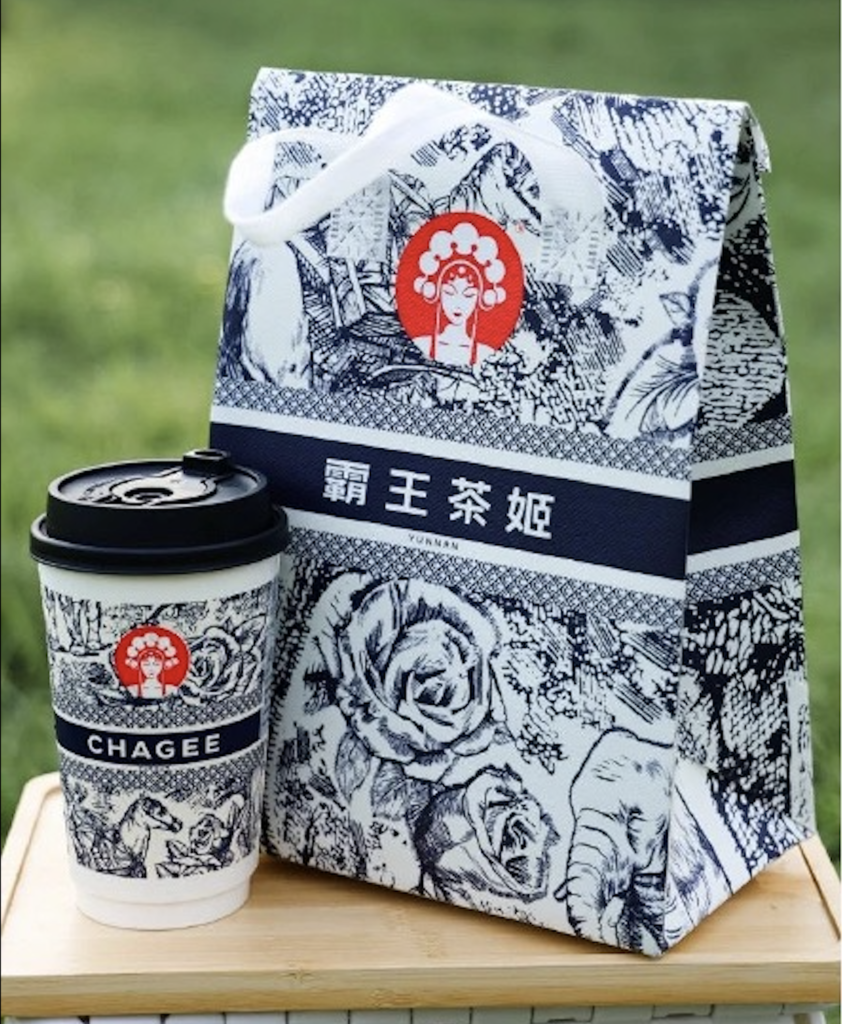
Figure 12. CHAGEE (霸王茶姬)
Source: Trinity’s blog
(For those interested in learning more about these various “New-style Chinese Tea” brands, please refer to this article: Emerging Trends in China’s New Style Tea Market-Anticipation Builds Worldwide-)
Interviewer: “Then, what would you say are the primary challenges that brands face when trying to expand into Kyoto?”
Mr. Gao: “As mentioned earlier, constraints from landscape and aesthetic regulations can certainly pose design barriers. However, for food and beverage brands, the primary draw remains the quality of the cuisine itself, so it might not be such a significant issue. On the other hand, for industries where the physical store’s presence is a core element of the brand—such as art-related businesses, clothing, or fashion and apparel brands—this challenge could become much more substantial.”
Mr. Gao: “Secondly, Kyoto is a relatively small city with a high density of low-rise buildings and limited tourist zones, which means commercial facilities are not very abundant. It’s fair to say that prime locations and spaces are almost entirely occupied already. As I mentioned before, the cost of securing a good location is exceptionally high, including substantial entry fees. Furthermore, many real estate agencies in Kyoto hold exclusive contracts with tenants, meaning only one specific agent can handle a particular property. No other agent can introduce you to that space. In such an environment, a brand must work with multiple brokers—Agent A, B, C, and D—to cover the market. Consequently, the brokerage fees can end up being three to four times higher than what you would typically see in China.”
Interviewer: “So, it’s a situation where core resources are essentially controlled by a specific, limited circle of people.”
Mr. Gao: “Exactly. And it’s not as if these resources are centralized within just a few large agencies; rather, they are fragmented across numerous small agents, making the landscape incredibly complex and driving up contracting costs. For instance, being an ancient city, there are often deep-rooted relationships between landlords and agents that span three generations. If an agent has a long-standing client they are close to, they will prioritize leasing to them first. It’s a very closed ecosystem. You can imagine how much more it costs for an outsider to break into this circle. Furthermore, the brokerage process can involve multiple layers of intermediaries, a structure that further inflates the overall costs.”
Interviewer: “It sounds as though the cost of opening and launching a business in Kyoto is indeed quite formidable.”
Mr. Gao: “Yes, indeed. The cost of opening and launching a shop in Kyoto is exceptionally high, particularly when it comes to renovation expenses. By my rough estimates, the gap in renovation pricing between China and Japan is somewhere between three to five times. In this environment, opening just one store in Japan requires an investment equivalent to opening three or four stores back in China.”
Mr. Gao: “Furthermore, local culture and interpersonal relationships become crucial. The real estate situation I mentioned earlier exists because the community is small and everyone knows each other. Kyoto is a relationship-based society dominated by a multitude of small-scale landowners. Most commercial properties are held by individual owners who have inherited these buildings through generations. Because they’ve used and managed these properties for so long, the connections between landowners are incredibly tight—they’ve often known each other since childhood. Consequently, if a brand fails to succeed or behaves poorly in one area, that reputation spreads instantly. You might find that when you try to open your next shop in a different location, no one will be willing to lease to you.”
Interviewer: “So, reputation is everything. It sounds as though any expansion into Kyoto requires even more meticulous planning than one might initially imagine.”
Mr. Gao: “Exactly. It may not be a very favorable environment for startups. As I mentioned before, the Japanese market only accepts the final, polished product—it isn’t very tolerant of trial-and-error. To put it bluntly, I believe launching a brand from zero in Japan is extremely difficult. It is far easier to build extensive experience abroad first—honing your supply chain, inventory management, and, in the case of food and beverage, the refinement of flavors—rather than starting fresh in Japan. If a brand is already established and successful elsewhere, once they overcome the initial hurdles of adapting to the local market, those strengths become their ‘comfort zone,’ allowing for smoother business operations thereafter.”
7. Differences in Taste Preferences Between Japanese and Chinese People: A Chinese Perspective
Interviewer: “As you are in the food and beverage industry, I’d like to ask a few questions regarding that field. What do you see as the major differences between the palates of Japanese and Chinese consumers? Are there certain dishes, for example, that are incredibly popular in China but rarely ordered by Japanese people?”
Mr. Gao: “First of all, regarding the choice of ingredients, Japanese people—unlike Chinese consumers—tend to avoid things they aren’t familiar with. Except for a small segment of the wealthy or adventurous, the vast majority of consumers generally won’t purchase ingredients they haven’t encountered before. For instance, most would never even recognize bullfrog as a food item, let alone have the courage to try it (laughs). It simply doesn’t align with their dietary lifestyle.”
Mr. Gao: “Next, regarding seasoning—across all Japanese cuisine, including dishes with foreign origins like curry or Chinese food, there isn’t as strong a focus on aroma as there is in China. Intense aromatic dishes, such as stir-fries using scallions, ginger, and garlic, or those flavored with spices like Shisanxiang (thirteen-spice powder) or Wuxiangfen (five-spice powder), are generally not preferred. In a way, you could say they are actually too sensitive to aromas; they prefer spices to be used sparingly and dislike aggressive spice profiles. On the other hand, they do have a strong preference for dishes with a high salt content.”
Interviewer: “Chinese people often perceive Japanese food as being very healthy and light. However, because it is so clean and ‘simple’ in its flavor profile, the saltiness might actually stand out more prominently, creating an impression that it is, paradoxically, too salty.”
Mr. Gao: “That’s true. For us, Japanese food is perceived as light yet salty. That sense of lightness stems from the minimal use of oil; most Japanese dishes are relatively low in fat. Perhaps that’s why Japanese people love rich tonkotsu ramen broth so much—it’s as if their bodies lack sufficient oil and they need a periodic ‘refill’ (laughs). I suspect Japanese consumers even feel a certain sense of guilt when eating ramen.
A typical Japanese dietary habit is very healthy and light compared to China—take breakfast, for example, which often consists of grilled fish. At Yoshinoya, you’ll see breakfast sets with rice, fish, and pickles. However, for lunch, they might have ramen, and for dinner, fried rice and karaage (fried chicken). There is a vivid contrast between ‘light’ and ‘heavy’ meals, and they seem to keep them strictly separate. Furthermore, Japanese desserts tend to be much sweeter than Chinese ones. Compared to Chinese people, who are quite sensitive to sweetness, I feel the Japanese have a real ‘sweet tooth.’
Also, except for multi-course Kaiseki, most Japanese meals are served in a Teishoku (set meal) format—one main dish with two or three side dishes. This is different from China. In China, set meals are for quick snacks, while dining out usually involves ordering individual shared dishes. In Japan, people stick to set meals for daily dining and only order many small plates when they are out drinking. This stems from the difference between the communal dining style of China and the individualized portioning style of Japan. Consequently, unlike Chinese cuisine where a variety of dishes are served at once, it seems difficult to achieve a total nutritional balance within a single meal in the Japanese style.”
8. On Promotion and Marketing Strategy
Interviewer: “For example, when it comes to seasonal products or small-scale events, what kind of creative approaches or strategies do you employ for your promotions?”
Mr. Gao: “Yes, I feel that the demand for promotional activities is actually higher in the Japanese market. Japanese consumers crave something ‘special’—they need that extra spark, even if it’s just a small stimulus provided through a promotion. To give an example, Japanese people love celebrating Western holidays. Perhaps it’s because traditional Japanese holidays are relatively quiet and solemn; there seems to be a need to adjust or balance the social atmosphere using events like Halloween, Christmas, or various other Chinese and Western holidays.”
Interviewer: “Lastly, I’d like to ask for your advice for other Chinese companies looking to expand into the Japanese market. What would you say to them?”
Mr. Gao: “Yes, I have much to say, but let me summarize it into a few key points. First and foremost, you must understand that growing a business in the Japanese market takes time. In Japan, aiming for rapid, explosive growth can often be counterproductive. Therefore, right from the initial stage, it is essential to have a firm mindset that things will unfold gradually. By accepting this pace, you can avoid falling into a state of psychological exhaustion or ‘attrition’ that often comes from mismatched expectations.”
Mr. Gao: “Second, although Japan belongs to the same East Asian cultural sphere as China, the behavioral patterns of the Japanese people are entirely different from those on the mainland. Partly due to its nature as an island nation, the way things are executed differs fundamentally from what we are used to in mainland China. There are many cases where what works in China simply does not apply in Japan. Therefore, it is essential to learn the Japanese ‘rules of the game.’ When developing the Japanese market, you must approach it with the mindset of starting from zero. You cannot blindly transplant what you are doing in China and expect it to work.”
Mr. Gao: “Finally, as I mentioned before, Japan already has near-perfect solutions for almost every challenge. Therefore, the best approach is to tackle your business with a profound willingness to learn. Instead of relying solely on financial power or superficial marketing gimmicks, it is crucial to communicate deeply with local consumers and keep learning from them. Take their criticisms and feedback to heart. Spend time understanding the ‘why’—Why do the Japanese do it this way? Why is the Japanese market structured like this? Breaking into the Japanese market requires a significant investment of both time and effort. I believe that only by doing so can you foster a true ‘pioneer spirit,’ overcome the initial hurdles, and eventually achieve a relatively smooth entry and long-term business operation.”
Interviewer: “I find your final point particularly thought-provoking. Regardless of which country a brand expands into, it should maintain a humble, continuous learning mindset and truly listen to the voices of local consumers. One should never behave arrogantly, like an invader.”
Mr. Gao: “I have seen countless Chinese businesspeople boast that they would ‘show the Japanese the latest business models,’ but without exception, they suffered crushing defeats in the Japanese market. I would ask them: ‘Is your business model truly the latest and the best?’ The Japanese might already know about that model and simply feel it won’t succeed in their market. Or perhaps it was already practiced ten years ago, and you simply didn’t know. It’s true that China’s economic power is currently greater, but the Japanese market has been running thirty years ahead of us. They might have already completed a full cycle that we are only just entering.”
Interviewer: “It may simply be that we are unaware of it ourselves. This is why humility is always so vital. That brings us to the end of today’s podcast. I truly enjoyed this discussion with you, Mr. Gao. Thank you so much for recording this episode with us. Entering a new market inevitably involves numerous challenges in localization. Please feel free to reach out to us directly whenever you need assistance.”
Leave a Reply